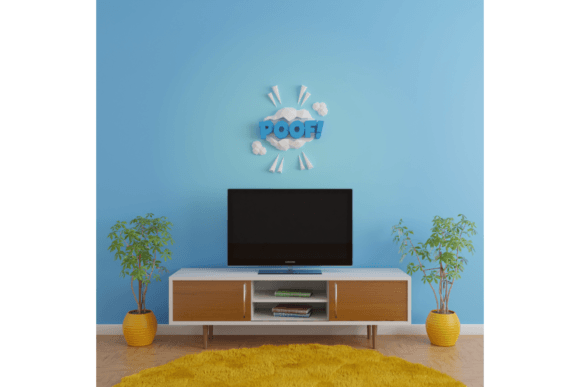
3D Papercraft Comic POOF: An Embroidery Review
As a designer who constantly bridges the gap between digital assets and tangible textiles, I approach every new file with a healthy dose of skepticism. When I first loaded the 3D Papercraft Comic POOF into my embroidery software, my immediate thought was about translation. This design is marketed as a centerpiece for living rooms or offices, bringing comic book aesthetics to life on a wall. However, for those of us in the craft business or running an Etsy shop, the real question is how this geometric, papercraft-style visual translates into a machine embroidery design. After reviewing the vector lines and simulating the stitch-out, I have some practical insights for makers looking to adapt this 3D SVG concept into wearable art or functional decor.
Visual Personality and Stitch Translation
The "POOF" aesthetic relies heavily on sharp angles, layered depth, and high-contrast color blocking. In its original 3D SVG format, it creates a sense of volume through shadow and light. In embroidery, we cannot rely on digital rendering; we must create that volume through stitch density and thread selection. My first impression is that this design demands confidence. It does not lend itself to subtle, tone-on-tone stitching. The personality here is bold, retro-modern, and graphic.
For an embroidery project, this means you are likely dealing with significant blocks of fill stitch bordered by crisp satin stitch or running stitch outlines. The "papercraft" look implies distinct separation between color fields. As a reviewer, I appreciate designs that respect the medium. If the digitizer has maintained clean jump paths and logical color changes, this design could be a standout. However, if the layers are too dense without proper underlay, you risk a stiff, bulletproof result that puckers on lighter fabrics. Always inspect the digital embroidery file in your editing software before committing to a final product to ensure the layering mimics paper folds rather than creating a thread jam.
Real-World Application: The Custom Sweatshirt Test
To truly evaluate this asset, I mentally placed it in a real-life scenario relevant to current market trends. Let’s imagine preparing a custom oversized sweatshirt for a boutique holiday collection. The goal is a unisex, streetwear-inspired piece that appeals to comic fans and design enthusiasts alike. The 3D Papercraft Comic POOF fits this niche perfectly because it avoids being overly juvenile while retaining playful nostalgia.
In this sweatshirt embroidery application, the design serves as a chest or back print alternative. Because the graphic is inherently structural, it anchors the garment visually. For a handmade product like this, I would recommend using a cutaway stabilizer to support the weight of the fill stitches on fleece. The contrast between the matte cotton fleece and the sheen of rayon or polyester thread will enhance the 3D illusion. Customers browsing Etsy seller listings respond well to this level of intentionality. They aren't just buying a logo; they are buying a textured interpretation of a digital art style. This specific adaptation turns a wall decor concept into a high-value custom apparel item that justifies a premium price point due to its complexity and visual impact.
Navigating Fabric Limitations and Hoop Constraints
While the design shines on stable knits, caution is required elsewhere. The geometric nature of papercraft styles means there is little room for error regarding registration. If you are attempting this on stretchy jersey, thin quilting cotton, or textured linen, the sharp corners may pull or distort.
- Small Hoop Sizes: Verify the dimensions immediately. Reducing a complex 3D-style design to fit a 4x4 hoop often destroys the internal details. The "poof" effect relies on space between elements; compressing it results in a muddy blob.
- Curved Surfaces: Avoid placing this center-mass on caps or curved tote bags unless you can flatten the area completely. The rigid geometry fights against natural curves, leading to gapping.
- Dark Fabrics: Since this mimics papercraft, white or light-colored fabric backgrounds usually work best to simulate the "paper" base. On dark fabrics, you may need to add a white underlay base or adjust thread colors significantly to maintain the intended contrast ratio.
- Frequent Washing: For items like baby bibs or kitchen towels, check the edge finishing. Sharp papercraft points can fray over time. Ensure the digitizing includes adequate tie-offs and perhaps a border element to secure the perimeter.
Commercial Viability and Brand Consistency
For small shop product lines, consistency builds trust. Using 3D Papercraft Comic POOF across multiple SKUs requires a unified approach. If you use it on a tote bag design, consider how it pairs with other items. Does the color palette match your brand? The graphic is versatile enough to serve as a signature motif for a maker focusing on geek-chic or modern nursery decor.
However, professionalism extends beyond aesthetics. Before listing any finished product, confirm the licensing terms of the source file. Just because it is categorized under Centerpieces or 3D SVGs does not automatically grant commercial embroidery rights. Protect your business by verifying you can legally sell items featuring this art. Additionally, when creating printable mockup previews for your online store, ensure the digital representation matches what your machine actually produces. Misleading customers with a flat vector image when the reality is a textured stitch-out leads to returns and negative reviews. Authenticity sells.
Designer Notes for Optimal Results
Based on my evaluation, here are actionable steps for integrating this design into your workflow:
- Test on Scrap First: Never run this directly on a final garment without a test sew-out. Check specifically for registration alignment at the sharp corners where different color blocks meet.
- Audit Stitch Density: If the design feels too thick, reduce the fill density by 10-15% in your software. This preserves the drape of the fabric and reduces thread consumption without sacrificing coverage.
- Thread Color Strategy: Use matte threads for the "shadow" areas and high-sheen threads for the "highlight" areas to physically replicate the 3D lighting effects intended by the papercraft style.
- Stabilizer Selection: Match the stabilizer to the end-use. Use tear-away for sturdy canvas tote bags, but strictly use cutaway for apparel to prevent distortion during wear and washing.
- Mockup Verification: Create black and white test sew-outs to verify value contrast. If the design reads poorly in grayscale, your color choices need adjustment regardless of how vibrant they appear individually.
The 3D Papercraft Comic POOF offers a unique opportunity to bring architectural, graphic art into the soft goods market. It challenges the embroiderer to think about light, shadow, and structure rather than just tracing lines. Whether you are creating a personalized gift for a comic collector or stocking a boutique with fresh design assets, success lies in respecting the technical limitations of the machine while embracing the bold visual language of the source material. Always prioritize the integrity of the stitch-out over the speed of production, and this design will undoubtedly become a staple in your creative repertoire.